


Contents
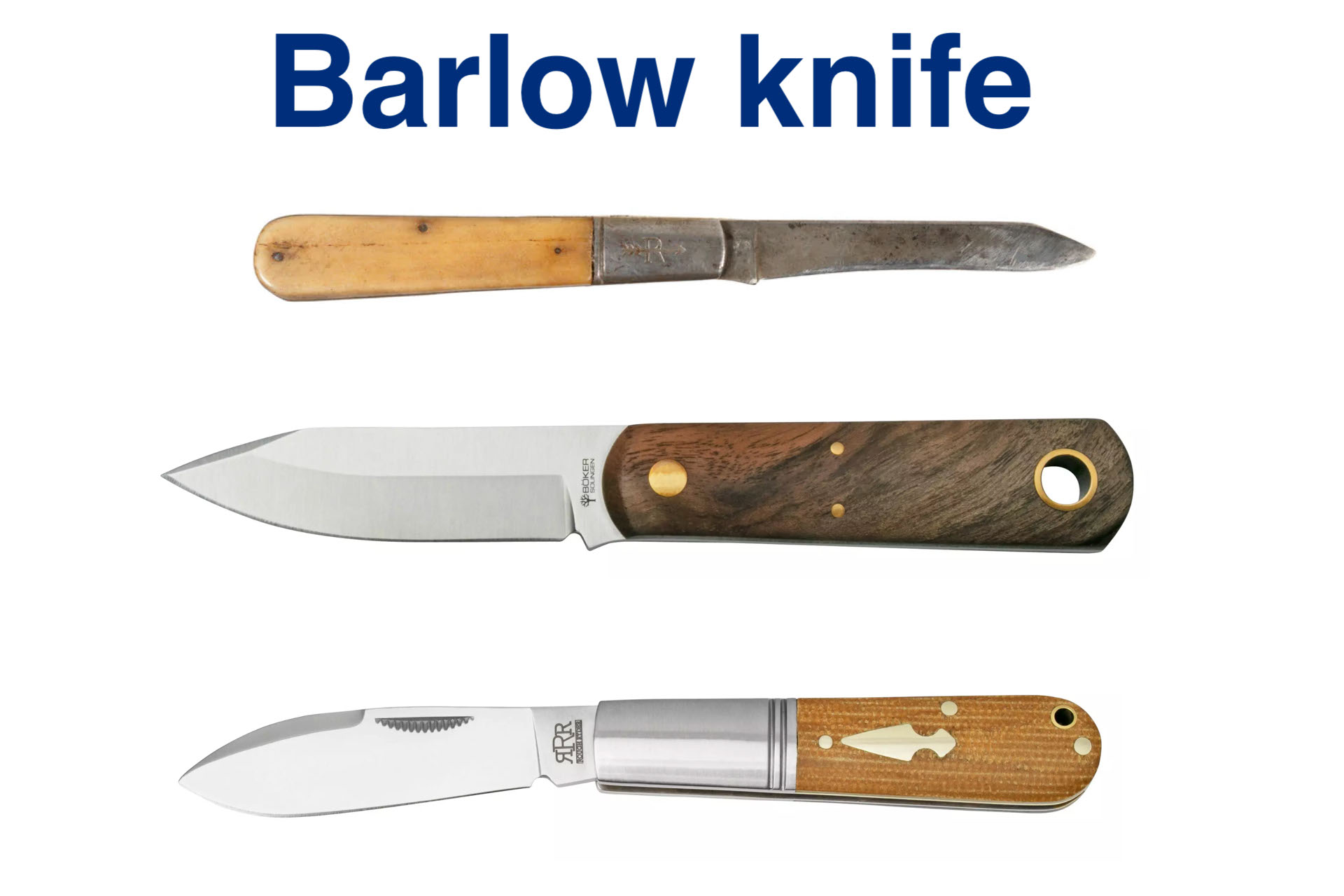
The Barlow knife is one of the oldest and most recognizable traditional pocket-knife patterns: a slim slip-joint with an elongated front bolster, simple spring action, and a practical blade layout built for everyday cutting. For collectors and buyers comparing heritage folders, the Barlow still matters because it combines pocket comfort, mechanical simplicity, and working-knife character in a design language that continues to influence modern custom knives.
A Barlow knife is a traditional slip-joint pocket-knife distinguished by its elongated teardrop handle, oversized front bolster, and one-or-two-blade configuration that balances strength, slimness, and affordability. Its simple, durable form turned it into the “people’s knife” of the Anglo-American world, making it both a workhorse and a collectible. (smkw.com)
A full 40 mm (≈1.57 in) of nickel-silver or brass bolster reinforces the pivot, letting the maker use thinner liners and lighter handle scales without sacrificing strength. The knife slips easily into a watch pocket, yet the clip- or spear-point primary blade tackles most daily chores—from whittling kindling to slicing fruit. Because it never locked, it could be scaled down, mass-produced cheaply, and sold to farmers, sailors, and presidents alike (George Washington famously carried one). (barlow-knives.com)
Modern enthusiasts prize the pattern for the same reasons: pocket-friendliness, mechanical simplicity, and rich heritage. Whether your budget is $20 or $400, you can find a Barlow that still feels “just right” in the hand.
Expert Tip from Harry Schenawolf: “If you’re new to traditional knives, start with a Barlow. Fewer blades mean fewer sharpening angles to keep track of, and the long bolster resists beginner-level torquing mistakes.”

Obadiah Barlow of Sheffield, England, produced the first known Barlow around 1670; within decades, American cutlers copied and iterated on the pattern, adding bone scales, stamped shields, and regional blade grinds. (Knife History)
In Sheffield’s booming cutlery scene, affordable iron and skilled grinders created pocket-knives for the working class. The elongated bolster was an economical way to strengthen the pivot with less costly iron liners. By 1745 the design had crossed the Atlantic; colonial records mention Barlows in Boston shops, and a 1783 ledger lists “Barlow penknives” shipped south. American makers—New York’s Sabin Smith, Pennsylvania’s Valley Forge, and later New York-based Schrade—experimented with peach-seed jigged bone, brass liners, and etched patriotic blades. During the Great Depression, Barlows sold for as little as 15 cents (≈$3 today), further cementing their “democratic” reputation.
The 20 th century saw stainless blades, Delrin handles, and corporate logos. Today, boutique runs from Great Eastern Cutlery and limited editions from Case XX leverage CPM powder steels and CNC-burnished micarta while staying true to the original silhouette. (greateasterncutlery.net)
Video credit: Blade HQ
Look for a single, extended front bolster, a slip-joint spring, and a two-bladed (clip + pen) or single-blade layout housed in a 3.25–3.9 in (8.2–10 cm) teardrop handle.
What blade configurations are available?
Which handle materials are common in 2025?
Bone (jigged, smooth, or dyed), wood (walnut, ebony), micarta, Kirinite®, G-10, and carbon-fiber overlays. Case’s 2025 Ocean Blue Kirinite® run shows how synthetic materials mimic traditional translucence without cracking. (caseknives.com)
Why is the long bolster important?
It anchors the pivot pin in solid metal, reducing blade wobble and preventing liner flex. Knifemakers can therefore keep overall thickness under 0.45 in while still passing strength tests—handy for a jean coin pocket.
The modern workflow combines age-old hand-fit back-springs with CNC-milled liners and laser-profiled blades, followed by heat-treat, hand-finishing, and peened pins.
Expert Tip from Daniel du Preez: “When you inspect a new Barlow, listen for a crisp ‘snap’ at half-stop; it’s the quickest tell of precise spring geometry.”
Match blade steel and handle scale to your environment: 1095 carbon for easy field sharpening, CPM S35VN for low-maintenance EDC, bone for heritage aesthetics, micarta for wet grip.
| Need | Recommended Size | Steel | Handle | Rationale |
|---|---|---|---|---|
| Office EDC | 3.25 in “Boy’s Barlow” | 14C28N | Polished wood | Stainless, non-threatening |
| Outdoors/Farm | 3.9 in Grandaddy | 1095 | Jigged bone | Patinas, easy to field-hone |
| Maritime | 3.5 in | LC200N | Micarta | Rustproof blade & grippy scales |
| Collector | Limited 3.38 in | 420HC | Exotic Kirinite® | Low run numbers, display value |
When choosing, weigh blade length against local legal maximums.
How do you maintain, sharpen, and store a Barlow properly?
Sharpen at 18–20 ° per side, strop often, flush pivot grit with isopropyl + compressed air, then add a drop of food-safe oil.
A diamond plate removes micro-chips in modern CPM steels; traditional 1095 benefits from ceramic hones. After wet weather, open the blade halfway, flood the joint with mineral oil, and cycle open-close ten times. Store carbon-steel Barlows in a ventilated drawer with a VCI (vapor corrosion inhibitor) tab to prevent orange spotting.
What common issues arise and how can they be fixed?
Blade play often results from a loosened pivot pin; careful re-peening on an anvil usually restores tightness. Rust? Use a fiberglass pen and light oil to preserve patina without scratching. Tight walk? Apply a drop of nano-oil and “work” the blade 30 cycles. For stuck springs, disassemble only if you have pin punches and a backup hardware kit—springs can crack when over-peened.
Barlow vs. Stockman vs. Trapper (quick-view table)
| Pattern | Blade Count | Typical Blades | Handle Shape | Pocket Bulk |
|---|---|---|---|---|
| Barlow | 1–2 | Clip + Pen | Straight/Teardrop | Slim |
| Stockman | 3 | Clip, Sheepfoot, Spey | Serpentine | Medium |
| Trapper | 2 | Clip, Spey | Dog-leg | Large |
The Stockman offers tool versatility—three edges for livestock chores—but at the cost of width and sharpening time. Trappers give two full-length blades ideal for skinning, yet their dual bolsters add weight. A Barlow’s economy of parts keeps maintenance low and grip intuitive; fewer internal intersections mean less lint accumulation.
Expert Tip from Steve Crowley “If you strop daily, a two-blade Barlow can outperform a dull three-blade Stockman any day; sharpness trumps count.”
United States (high-level):
Europe & elsewhere:
Always verify airport or venue-specific rules—confiscations at concerts remain common.
| Brand & Model | Blade Steel | Handle | MSRP | Notable Feature |
|---|---|---|---|---|
| Case XX “Ocean Blue” Limited | Tru-Sharp SS | Gator-jig Kirinite® | $89 | Collectible shield & numbered run |
| GEC #86 Boomtown | 420HC | Denim Micarta | $149 | Two-Acorn bolster etch, flush spring fit |
| Rough Ryder Grandaddy | 440 SS | Red bone | $24 | 4-in workhorse blade |
| Bear & Son Modern Large | D2 | White bone | $68 | USA-made, pin-less pivot |
Collectability hinges on fit-and-finish (“walk-and-talk”), material rarity, and production numbers. Limited Case runs often appreciate 10–20 % yearly, while GEC drops sell out in minutes, commanding double MSRP on secondary markets.
Farmers still use the clip-point for baler twine and apple sampling; carpenters score softwoods; anglers trim monofilament. Whittlers prize the pen blade for detail cuts, and leather-workers scribe stitching grooves. In bushcraft forums, the Grandaddy Barlow’s longer reach earns praise for tinder shaving—its thin grind excels at feather-sticks.
Collectors categorize by tang stamp eras, shield variants, and factory finishes. A curated 20-knife run spanning 1900–2025 tells an industrial history in miniature.
Re-hafting with stabilized burl, acid-etching carbon blades for forced patina, and engraving bolsters are popular. Swapping brass for titanium liners reduces weight by ~15 %. DIYers often drill lanyard holes 3 mm aft of the spring pin (avoid hitting the spring tail) and polish springs with 3,000-grit to improve walk.
See more: custom and personalized knife options.
Domestic makers increasingly source recycled 1095 or AEB-L steel, cutting energy use by 25 %. Bone covers now come from farm by-products certified by the Leather Working Group. Companies like GEC limit exotic-wood runs to FSC-certified blocks, while offshore factories use water-based buffing compounds to curb VOC emissions. Yet mass-market imports still rely on nickel-silver mined under lax standards—ask brands for supply-chain transparency.
Expect powder-metal upgrades (CPM MagnaCut), magnet-assisted slip mechanisms for firmer half-stops, and AI-modeled ergonomics yielding slimmer yet stronger liners. Heritage collaborations—such as Case × Apple Watch titanium Barlow scales—hint that the pattern will straddle tech and tradition for decades.
Author: Aleks Nemtcev | Knifemaker with 10+ Years of Experience | Connect with me on LinkedIn |


I have an Imperial model, made in Providence R.I. knife. It has Barlow embossed on the metal at the knife “knuckle”. Where the blades fold out.
Is there any way you can help me identify it further? Pictures maybe.
I got it from neighbor whose uncle collected it from England in about 1960’s or before.
Excellent information. From my point of view as a fan of traditional knives, thank you — it cleared up several doubts for me.