


Contents
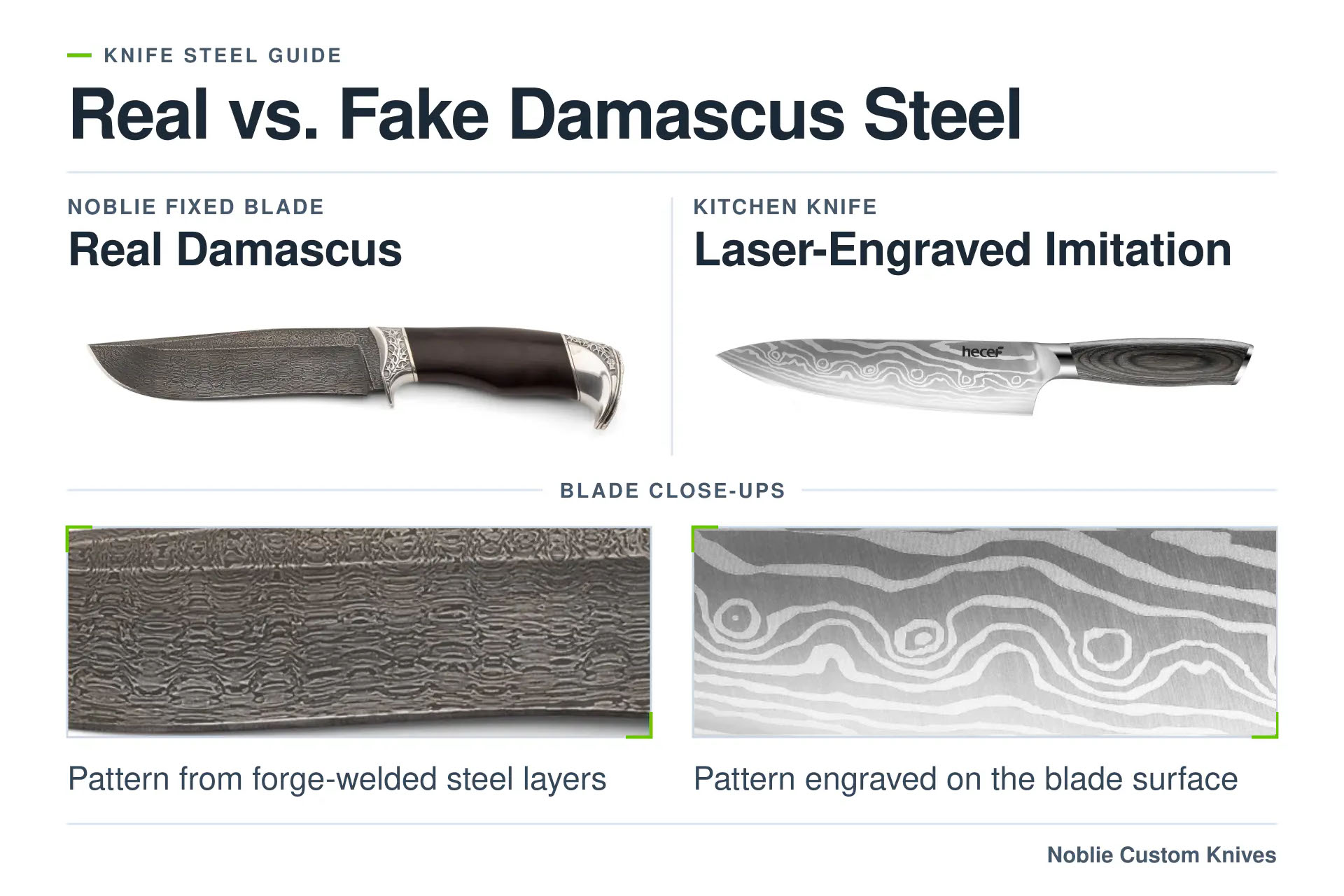
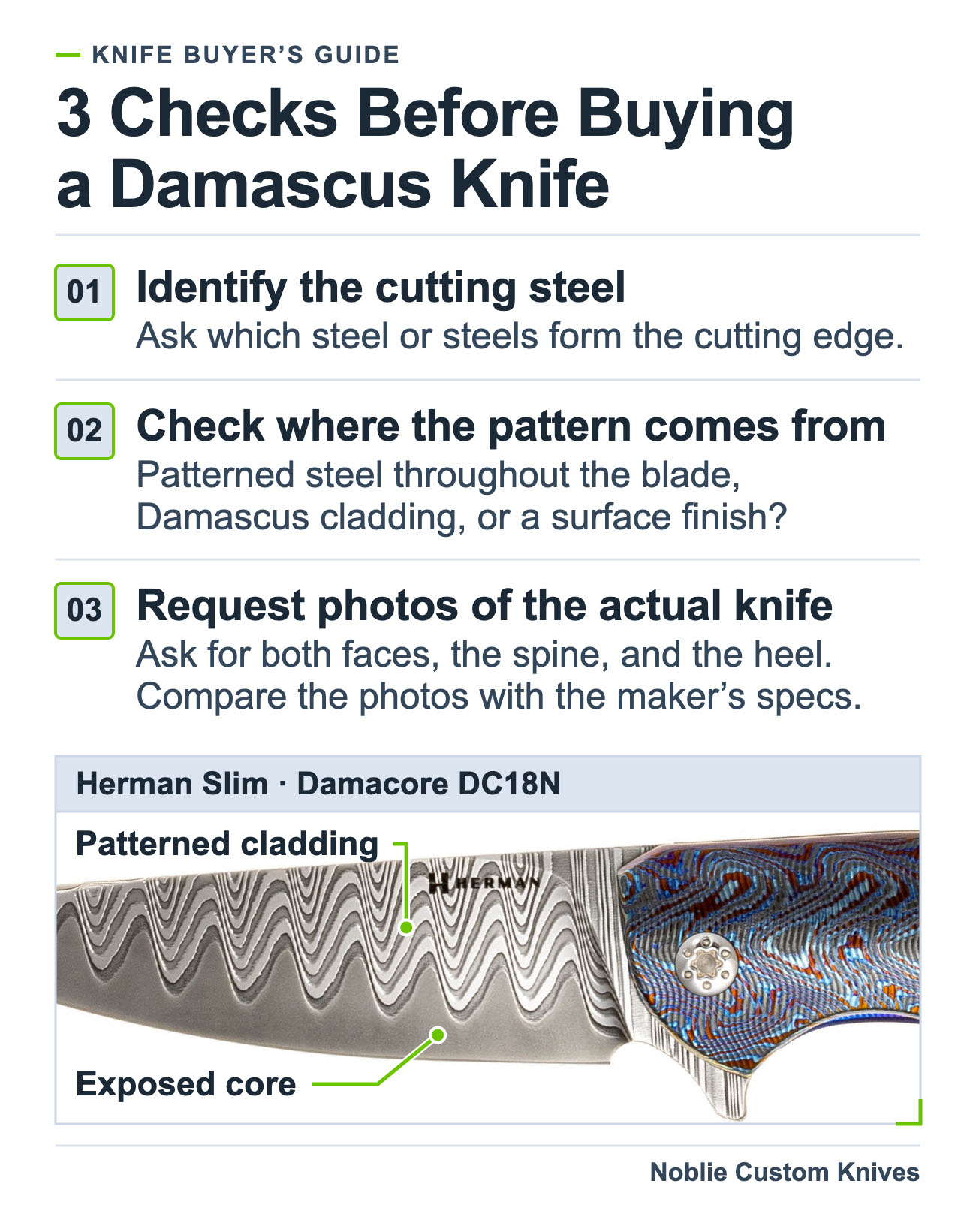
To tell real Damascus steel from a surface pattern, I start at the cutting edge. I want to know which steel reaches it and where the pattern comes from. A pattern-welded blade carries the pattern in the steel itself. On a Damascus-clad knife, patterned outer layers surround a separate core, which can show as a plain band near the edge. A surface finish can produce a similar-looking pattern on a blade made from a single steel.
I check the workmanship separately. On a chef’s knife, I look for a grind that will slice cleanly through dense food. On a one-off collector’s knife, I spend more time looking at the finish and checking that the maker’s records match the piece.
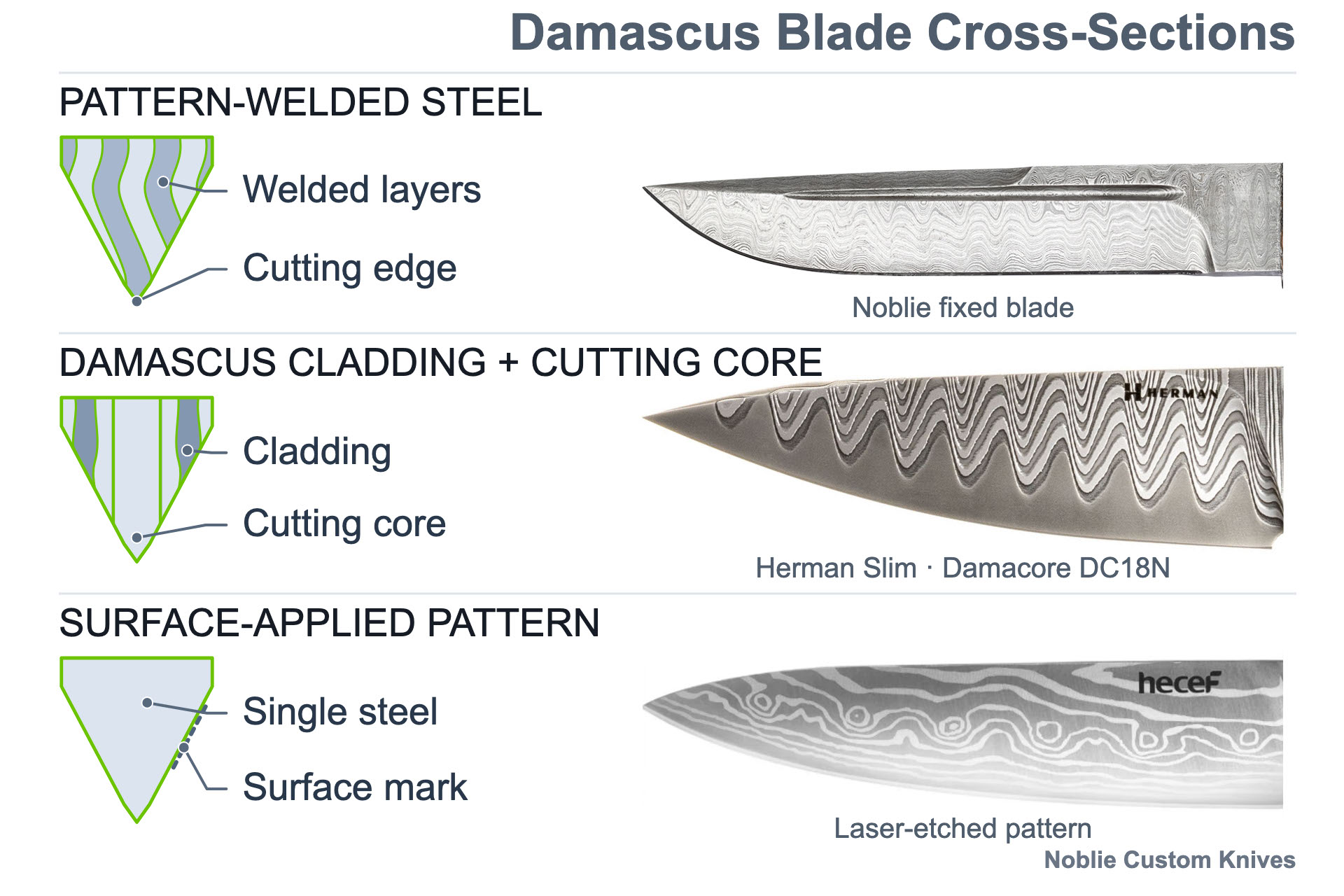
Some genuine patterned steels are made by powder metallurgy. Damasteel DS93X, for example, combines RWL34 and PMC27 in the blade material. Damacore DC18N uses those two alloys in its patterned outer layers and a separate N11X core. The grade identifies the construction more precisely than the pattern name. Historical crucible Damascus belongs to a different material family. See our guide to wootz steel.
At the bench, I look at the heel first. If the choil exposes the cross-section, I can sometimes see the core between the two outer layers. Then I look for where the pattern ends on the primary bevel, the broad ground surface. On a clad knife, that line can sit above the narrow bevel formed by sharpening. A clear side photo can help you distinguish the two.
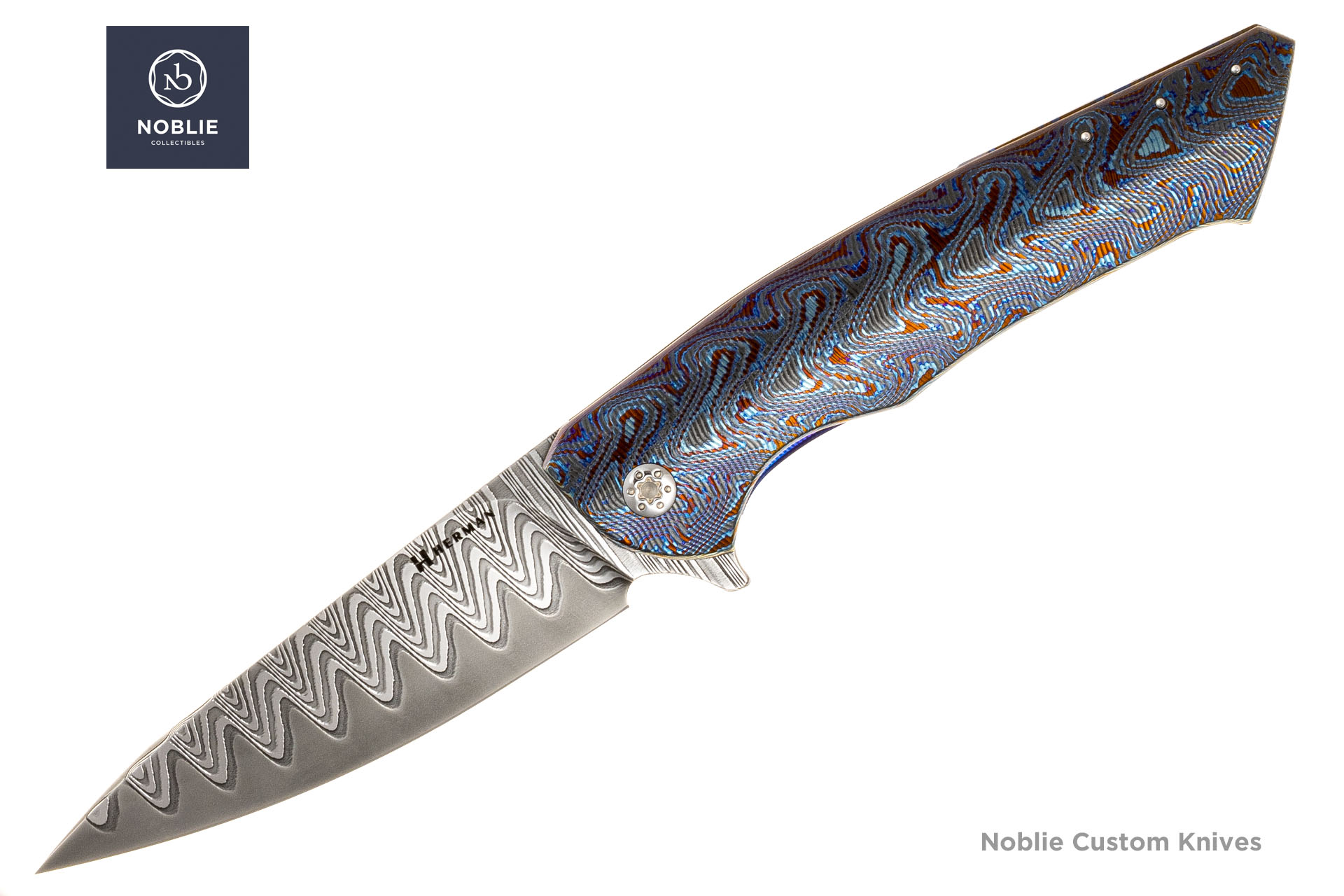
I turn the blade under angled light to see how the spine and sharpening bevel are finished. A rounded or polished spine can show little contrast, and a fresh sharpening bevel can look bright even on a blade made from patterned steel throughout. Online, I ask for a straight-on shot of the spine and one in angled light. Visible layer lines can support the seller’s description.
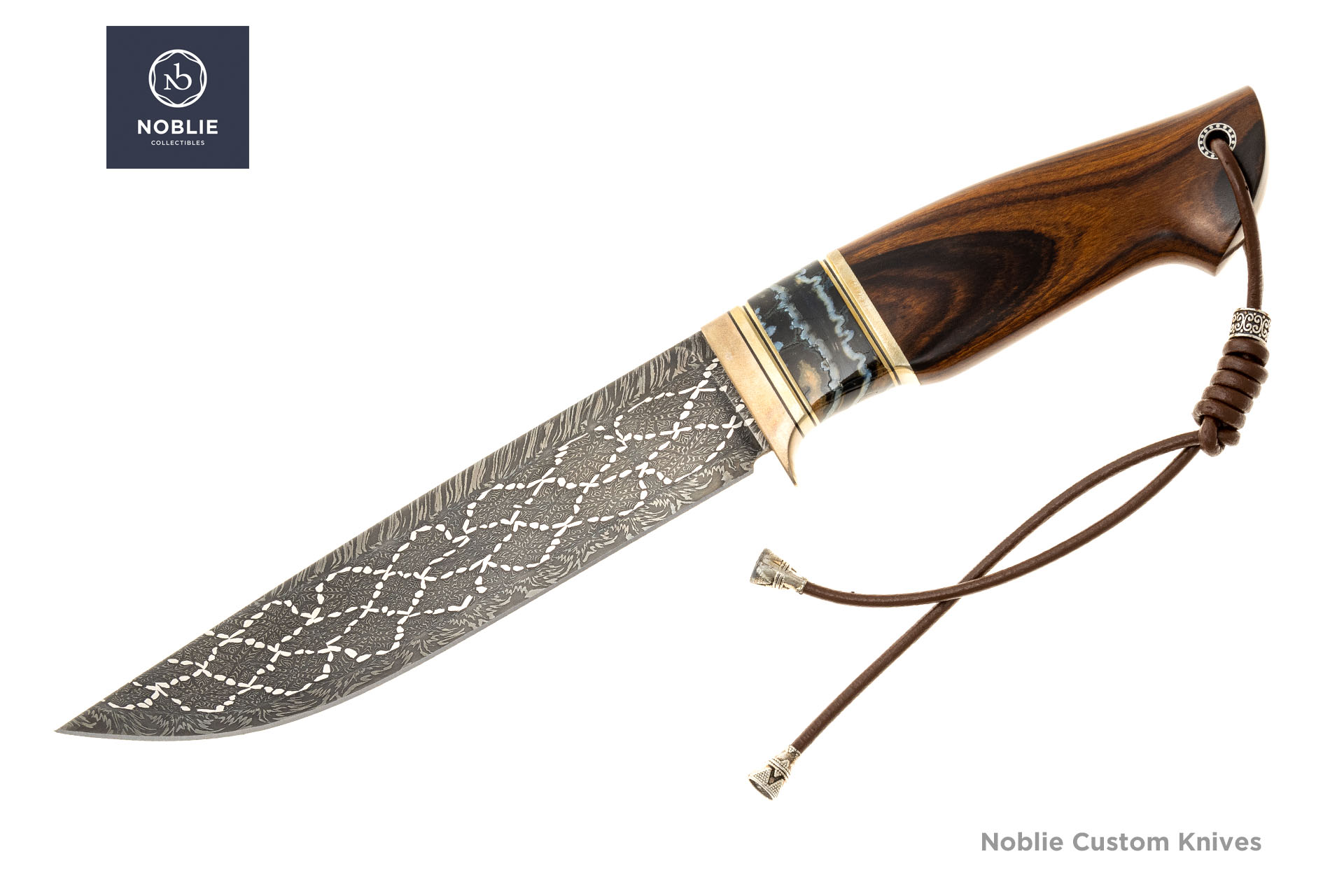
Ask for both sides of the actual knife, ideally in the same light. Follow the pattern over changes in the grind. A sharp cutoff that looks like the edge of a graphic is worth a closer look, especially if the listing gives no construction details. Regular repetition also deserves context. A mosaic Damascus maker can build the same motif into successive sections of the billet. If several listings show matching scratches and reflections in the same places, start by asking whether they use the same stock photo.
What you can see. Photos show surface contrast, changes across the grind, and the visible condition of the blade. Etching brings out differences between alloys in genuine layered steel. A stencil etch or laser marking can also produce contrast on a single steel. Both kinds of finish can show texture, so feeling the pattern with a fingernail tells you little about the construction.
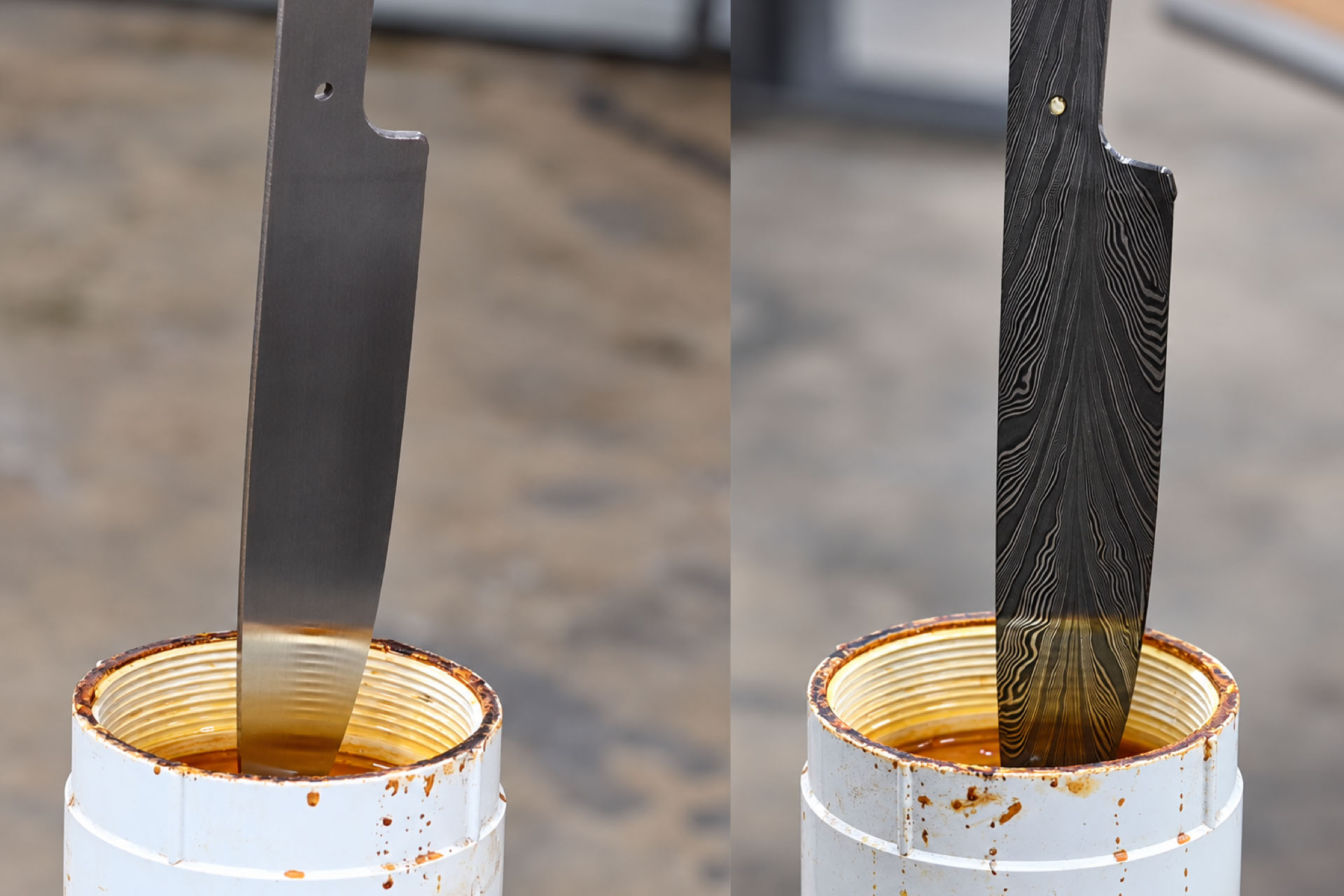
What to follow up on. If a photo shows a dark line that could be a seam, I ask for a close-up with the light coming from the other side. A cladding boundary, a scratch, and an open seam can all look dark from one angle. A second view or a short video of that spot under moving light may reveal an opening.
What needs documentation or measurement. The alloy grades and origin need records tied to the model or the individual knife. A properly performed Rockwell C test measures hardness (HRC) at the test site. A lab can examine a prepared cross-section for layers and bonding. For example, a published study examined the weld zone between K600 and K720 steels on a section of a forge-welded specimen. That zone is hidden in a photo of the finished blade.
Keep a buyer’s inspection non-destructive. A magnet attracts nearly all hardened knife steels, layered or not, so it can’t confirm how a blade was made. Sanding or re-etching changes the finish you’re trying to evaluate. If you need more certainty, ask for the manufacturer’s specification or a photo of a documented billet offcut.
I look along the edge from heel to tip for chips and sudden changes in sharpening bevel width. Then I turn the blade over and check the same spots on the other side. I expect the two faces of a single-bevel kitchen knife to differ. On a symmetric grind, a bevel that suddenly widens on one side is worth a closer look. At the tip, I check for damage or signs that the point has been reshaped.
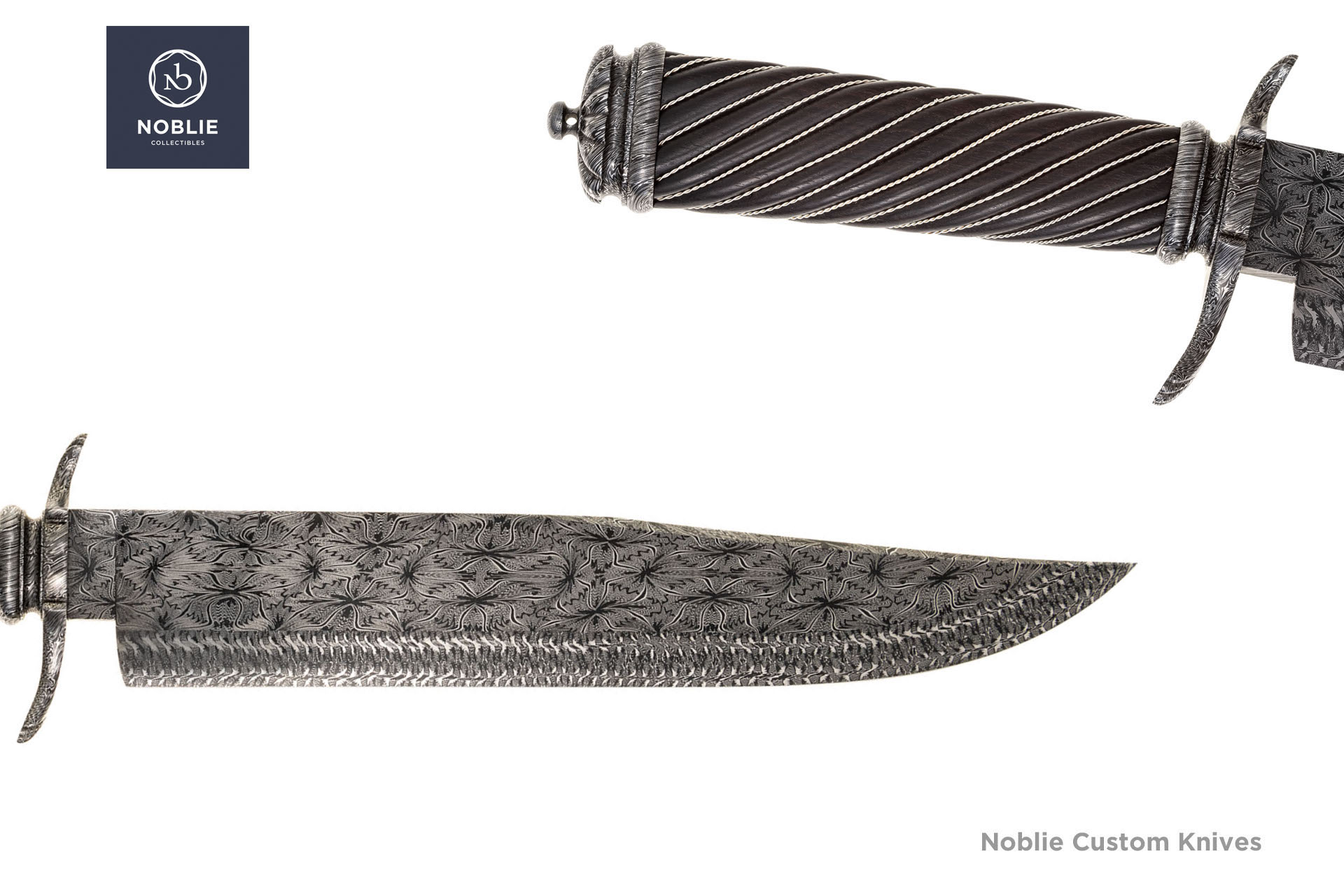
For a working knife, I ask how thick the blade is immediately behind the edge and where that measurement was taken. I compare equivalent points on blades made for the same job. A sharp apex can start a cut easily while a thick grind still wedges in a carrot. A sturdier grind may be appropriate on a fixed blade built for rougher work. The steel and heat treatment matter alongside that geometry.
A visible cladding line marks where two materials meet. A crack, an open gap, or a section that is separating deserves a closer inspection. Ask for a sharply focused close-up and an explanation from the maker before buying a blade with an apparent opening. Laboratory cross-sections illustrate how cavities can occur at a bonded interface. For a documented example, see the micrograph of a VG10 laminate.
On a fixed blade with a guard, I check where the guard meets the blade and where the handle seats against the guard. On a folder, I ask about blade play, centering, and how the lock engages. Our guide to knife fit and finish goes into more detail.
Yes. A lower-priced knife can have genuine welded layers or genuine Damascus cladding. I check whether the listing names the cutting steel and explains where the pattern sits. “VG10 core with patterned stainless cladding” gives me a construction I can check. With “Premium 67-layer Damascus,” I still have to ask what forms the edge and where the layers are.
Ask how the layers were counted if the seller makes a point of the number. A published study describes a VG10 laminate with 31 layers in total, including the core. The count describes the build. For a working knife, give more weight to the cutting steel, heat treatment, and grind. For budgeting by knife type, see Damascus knife price ranges.
These are the five questions I ask when a listing leaves the construction or condition unclear.
For a production knife, I match the model number to the manufacturer’s specification. On a one-off or secondhand piece, I check the photos and any serial number or maker’s mark against the paperwork when it’s available. If the construction is still uncertain, I decide what I’d pay based on what I can verify. You can use the same checks when comparing the Damascus knives in our catalog.


There are no comments for this article yet.