


Contents
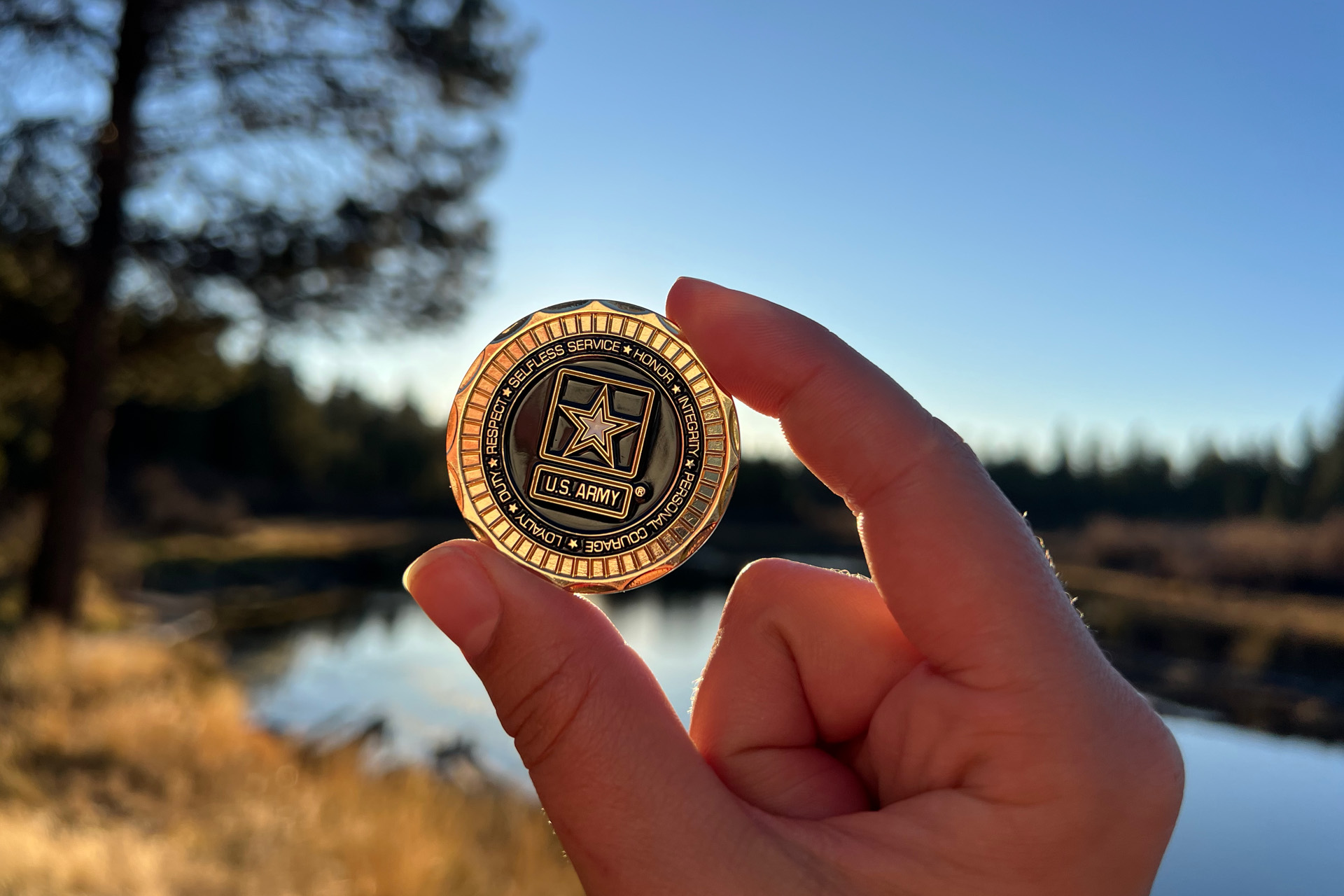
My wife found the coin in the dryer about a month after I left active duty. She held it up between two fingers, asked if it was a quarter that had gotten away from me, and I had to explain that no, it was probably the only thing I’d held onto from my last unit besides my dog tags. Sixteen years later, it still rides in my right front pocket every day, alongside a folding knife my brother gave me the week I came home.
I’ve thought a lot about why those two objects, of all the gear I accumulated over a career, are the ones that stuck. They aren’t the most expensive things I own. They aren’t even the most useful. They are, somehow, the things I notice when I’m not carrying them. So this is a piece about that. About veteran everyday carry items, and why the small ones tend to outlast the loud ones.
Veteran everyday carry items tend to be small, specific, and emotionally weighted. Cost has nothing to do with it.
A challenge coin is not a souvenir. For many veterans, it is a tie to a unit, a place, and a tradition that does not end with the uniform.
A knife earns its place through use. Not because it is tactical, expensive, or impressive, but because it becomes part of a routine.
The objects that last are usually the ones that get carried and cared for, not the ones sealed away in shadow boxes.
For people who haven’t served, challenge coins can look like cheap medallions. They’re not. The one in my pocket is heavier than it should be, smaller than a silver dollar, with my battalion’s insignia on one side and a phrase on the other I’ve never said out loud to a civilian. A senior NCO pressed it into my hand during my last week in country, and the rules of the tradition were simple. You carry it, or you owe a round to whoever calls you on it.
I haven’t been called on in years. I still carry it.
What surprised me, after I got out, was how many of us have a version of this story. I’ve been at funerals where coins came out of pockets and went into caskets. I watched a buddy of mine pull his out at his daughter’s high school graduation and just hold it under the table while she walked across the stage. The objects are small. The weight they carry is not.
The tradition itself is old enough that no one agrees on its exact origin. Most of the stories trace back to World War I or World War II, airmen or infantry, a coin struck for a unit as proof of service or belonging. The official record is thin, which feels about right for a tradition that mostly lived in pockets, bars, barracks, and handshakes before anyone thought to document it.
What is clear is that the custom spread and stayed. Units commission their own designs. Commanders present them at promotions and farewells. Families order them for retirements and memorials. Reunion groups make anniversary runs. The medium has not aged out. If anything, it has moved beyond the military into law enforcement, fire departments, and veteran organizations.
For most veterans, a challenge coin is not something you buy for yourself. It is something you receive. That is the part that makes it different from other keepsakes. The weight of it in your pocket is the weight of someone handing it to you.
The knife came after. The coin came from the service.
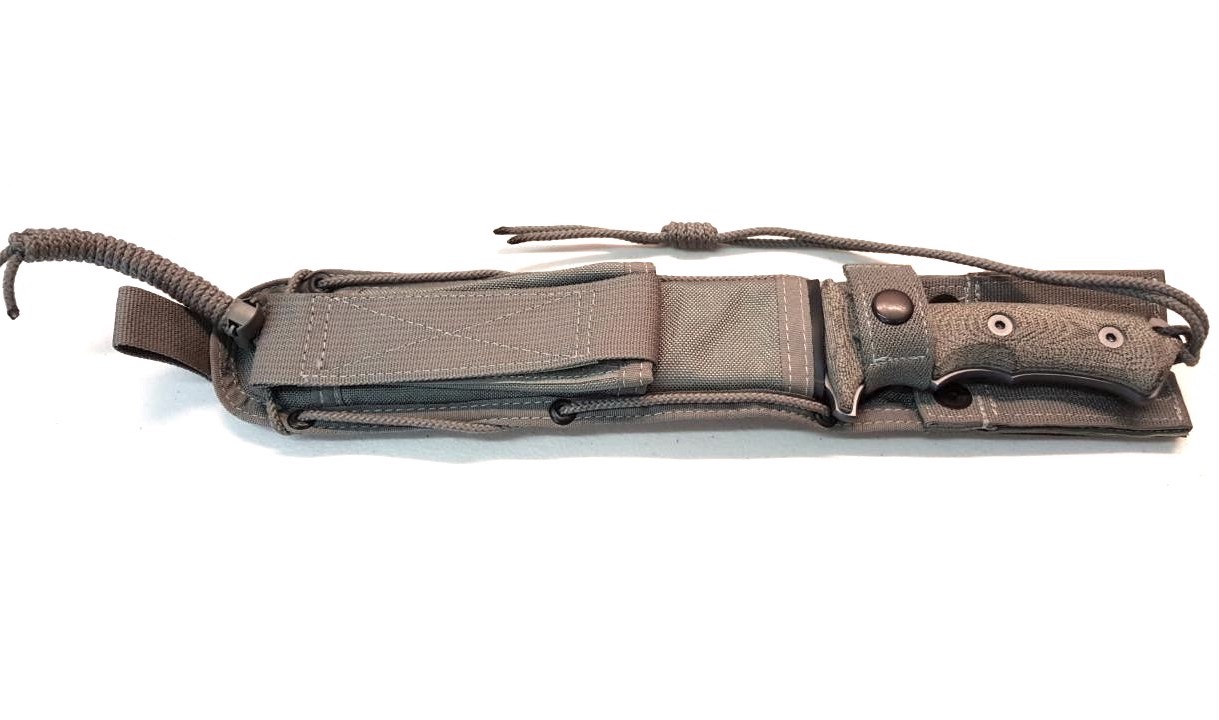
It was a fixed-blade I had for years, given to me by my older brother, also a vet, during that rough first year out. I think he understood what I needed before I did. There is something about a knife that carries a practical weight in a way a medal or a coin does not. You use it. You sharpen it. You take care of it. In taking care of it, you stay tethered to something quiet.
I replaced the sheath twice. The handle darkened from skin oil and weather. The blade went through the kind of ordinary work knives actually do: opening feed bags, trimming cord, cleaning fish, cutting cardboard, scraping mud off things that should not have had mud on them in the first place. Nothing heroic. Just useful.
That is probably why it stayed.
There is a version of knife talk that gets too loud too fast. Steel charts, grind geometry, handle materials, edge retention, toughness. All of that matters if you use a knife hard. But for most people, and I think for most veterans too, the knife that stays with you is not always the best knife on paper. It is the one that fits the hand, fits the pocket or belt, and does not feel like a performance.
If you carry one, carry it legally. Know your local laws. Keep it sharp. Don’t make it part of your personality. A good knife does not need help being useful.
I’m not the only one who has noticed this pattern. Pew Research has reported that many post-9/11 veterans describe military service as something that shaped their identity, while also noting that the transition to civilian life can be difficult, especially for those who served after 9/11. The VA points veterans toward transition resources, counseling, peer support, and local services for exactly this reason: leaving the structure of military life is not just an employment change. It is a change in rhythm, language, belonging, and daily purpose. (Pew Research Center)
The first year is loud. After that, it gets quieter, but it does not go away. You build routines because you have to. Work. Family. Bills. Sleep, if you can get it. Somewhere inside all of that, small objects start doing more work than people expect.
Sebastian Junger wrote about this in Tribe: On Homecoming and Belonging. His argument, in plain language, is that service members often experience a level of group belonging that civilian life rarely replaces. Coming home can mean leaving a group that knew exactly where you fit and returning to a society that mostly expects you to explain yourself in job-interview language. (Hachette Book Group)
The objects we carry are one of the few things that bridge those two worlds. They don’t ask anything. They don’t require explanation. They just stay.
For me, the coin and the knife do two different jobs. The coin is memory. It connects me to a place and a group of people I left behind. The knife is present. It is in my hand when I am breaking down a box, cutting paracord at a campsite, or doing some small task that needs doing. One looks back. The other keeps me here.
Over the years, I’ve asked enough buddies what they keep on them every day to notice patterns. The list is not long, and it is fairly consistent across branches and eras of service.
A unit coin or memorial coin, almost always carried in a pocket rather than displayed. The ones that get displayed tend to be duplicates. The real one goes with you.
A knife. Folding for most. Fixed-blade for the ones who spend more time outdoors or grew up around tools.
A multitool, often the civilian version of whatever they were issued or carried around long enough to trust.
A wallet with one piece of paper that does not belong there. A photo. A memorial card. A folded note from a kid who sent letters overseas. Nobody planned to keep it.
Dog tags or a smaller pendant version, usually worn rather than carried. More often seen on people who are a few years out, not decades.
Nobody plans this loadout. It accumulates. Each item earns its place by surviving a few moves, a few job changes, a few seasons of life. The things that do not earn their place end up in a box in the closet, which is not where these things go.
There is a version of this conversation that turns into gear talk, and I am not opposed to gear talk. But that is not really what any of this is about. The coin is not about coinage. The knife is not about knives. They are about continuity. About the quiet work of staying connected to who you were in a context that most people around you will never fully understand.
The transition resources will tell you to build new routines. That is true and useful. What they do not always say is that some of the old routines are worth keeping, and they do not have to look like anything special. They can look like a coin in your right front pocket. They can look like a knife you have sharpened so many times you know the angle by feel.
I’ll keep both until I can’t carry them anymore, and then they’ll go to one of my kids. My daughter has already asked about the coin. My son keeps eyeing the knife. I haven’t decided yet, and I might let them sort it out.
The things we carry tell a story that is not always for other people. Sometimes it is just the story we tell ourselves about who we used to be, who we still are, and what we managed to hold onto.
Sources
Pew Research Center — The American Veteran Experience and the Post-9/11 Generation; useful background on veteran identity, combat experience, and readjustment after service. (Pew Research Center)
U.S. Department of Defense / Department of War archive — The Challenge Coin Tradition: Do You Know How It Started?; useful for explaining the uncertain but widely repeated origin stories of challenge coins and their modern military use. (U.S. Department of War)
U.S. Department of Veterans Affairs — Life transition and veteran support resources; useful context for the post-service adjustment period and available VA support channels. (Veterans Affairs)
Sebastian Junger — Tribe: On Homecoming and Belonging; useful interpretive source on belonging, unit cohesion, and the difficulty of returning from military life to civilian society. (Hachette Book Group)
Author: Eric Turney


There are no comments for this article yet.