


Contents
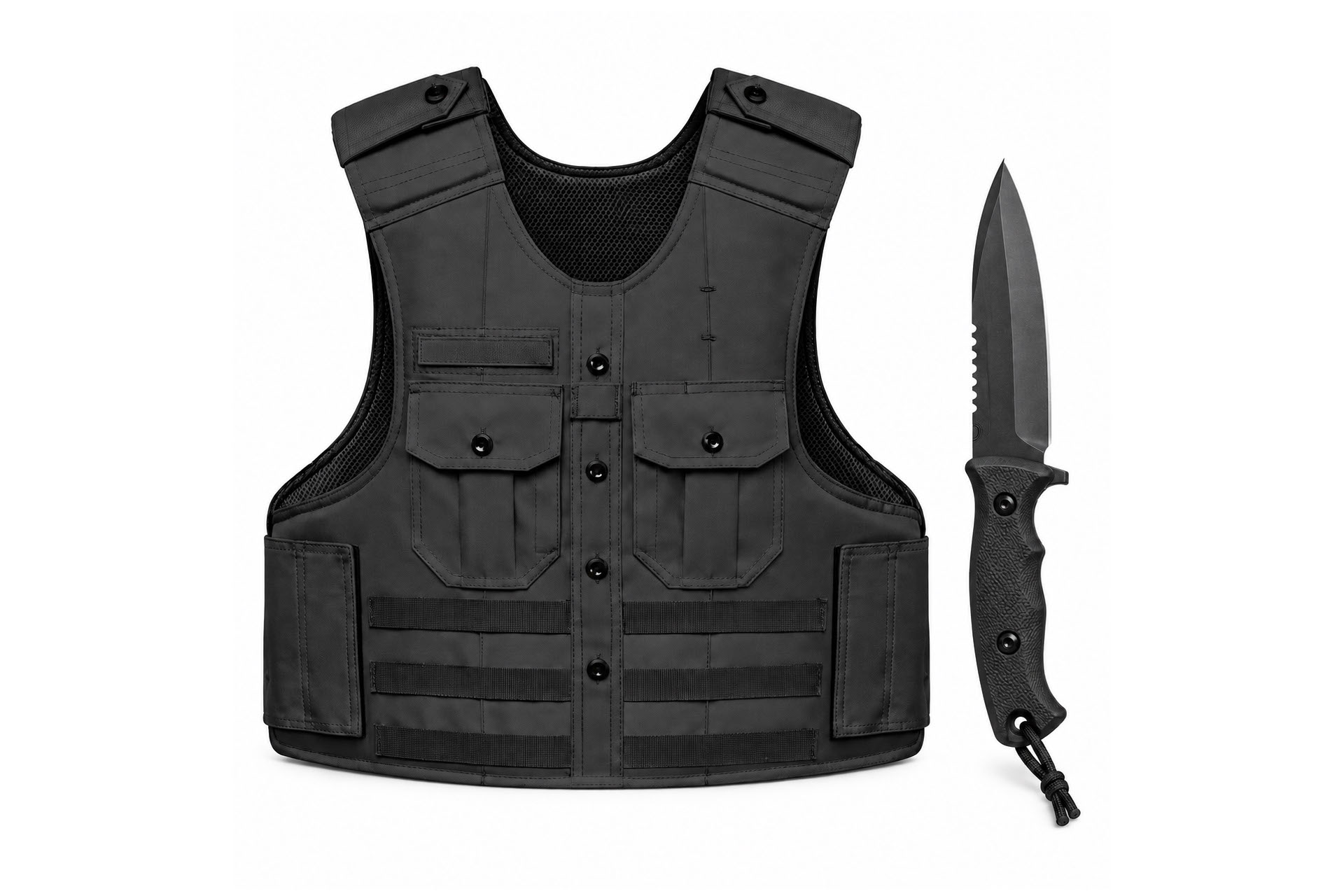
Can a bulletproof vest stop a knife? It may offer some resistance, but a ballistic rating alone does not establish stab protection. A vest certified for handgun threats is not automatically certified against blades. For that, look for a separate stab-resistance rating under NIJ Standard 0115.00, with a stated protection class and level.
This distinction matters whenever knife collectors discuss how a blade might interact with protective materials. Blade steel, hardness, and grind are familiar specifications, but none of them can substitute for a controlled armor test. The meaningful question is what a particular armor model has actually been tested to resist.
U.S. ballistic-resistant body armor is evaluated under the NIJ 0101 series. The current NIJ Standard 0101.07 works with the threat designations set out in NIJ Standard 0123.00. These include HG1 and HG2 for handgun threats and RF1, RF2, and RF3 for rifle threats.
Older ballistic products may still carry NIJ 0101.06 ratings. In that system, Level IIIA is a handgun-threat rating; its newer counterpart is HG2. Neither label is a stab-resistance grade. And a ballistic Level III designation must not be confused with Stab Protection Level 3: the numbers belong to different standards and describe different laboratory tests.
NIJ 0115.00, originally published in 2000 and still listed as active, evaluates resistance to specified hand-delivered edged and pointed threats. It does not certify ballistic performance. An armor model can comply with one standard, both standards, or neither. The testing results, not the words “bulletproof” or “stab proof,” determine what has been demonstrated.
The stab standard uses a guided drop apparatus, engineered test implements, and prescribed backing materials. Each protection level has a normal strike energy (E1) and a higher-energy overtest (E2). The numerical values are specified in the original NIJ 0115.00 standard, Table 1.
| Stab level | E1 strike energy | E2 overtest energy |
|---|---|---|
| Level 1 | 24 J (17.7 ft-lbf) | 36 J (26.6 ft-lbf) |
| Level 2 | 33 J (24.3 ft-lbf) | 50 J (36.9 ft-lbf) |
| Level 3 | 43 J (31.7 ft-lbf) | 65 J (47.9 ft-lbf) |
E2 is approximately 50% higher than E1. The standard traces Level 1, Level 2, and Level 3 to approximately the 85th, 90th, and 96th percentiles, respectively, of impact energies measured in British research in the late 1990s. Those historical research percentiles are not guarantees about any individual incident.
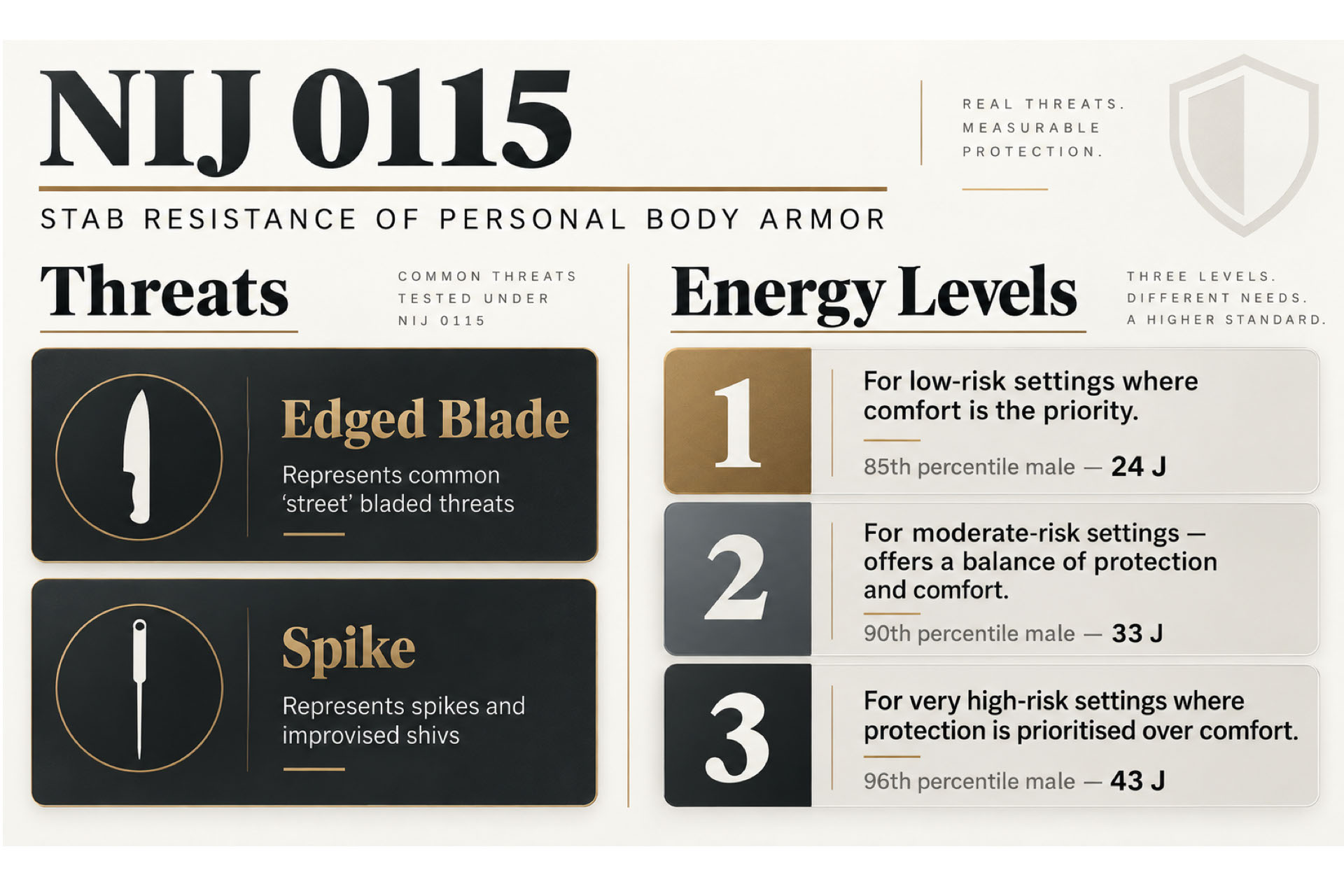
NIJ 0115.00 distinguishes between the Edged Blade class and the Spike class. The former uses specified knife-like test implements; the latter addresses pointed implements with a different test configuration. The classes are independently evaluated. A model may have a Level 2 edged-blade designation and a Level 3 spike designation, for example, or only one of the two.
A product described simply as “Level 2 stab resistant” leaves out essential information. You need to know which protection class that number refers to. A claim about one class should never be silently extended to the other.
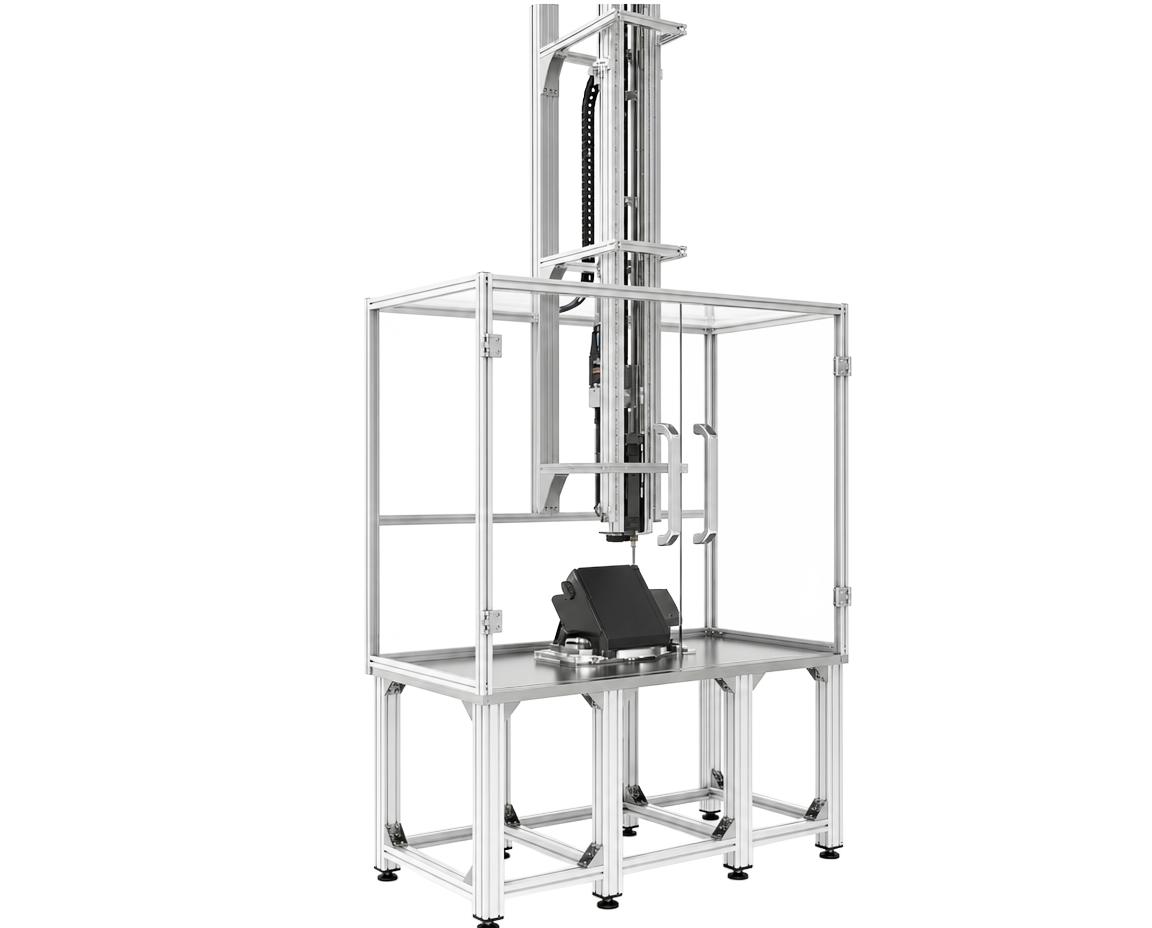
One frequently missed detail is that NIJ 0115.00 allows limited penetration. For qualifying E1 strikes, the maximum permitted penetration is 7 mm (0.28 in). At the E2 overtest, it is 20 mm (0.79 in). The standard specifies strike angles and acceptance criteria, rather than guaranteeing that a blade never enters the material.
Those limits come from the standard’s laboratory injury-risk assumptions; they are not a guarantee of medical safety in an actual incident. NIJ also cautions that results with its standardized test implements do not establish how every commercially available knife or improvised object will perform. The accurate term is stab resistant, not stab proof.
Soft ballistic armor generally relies on layers of strong fibers, such as para-aramids and ultra-high-molecular-weight polyethylene (UHMWPE). During a ballistic impact, the material can absorb energy through stretching, deformation, and engagement of neighboring fibers. Exactly how this happens depends on the projectile, weave or laminate architecture, bonding, and panel construction.
A knife or spike presents a different loading condition. Instead of a rapidly moving projectile engaging a broader area of the textile system, the contact can be more localized and sustained. Fiber motion, cutting, friction between yarns, and the stiffness of any bonded layers therefore become important to the result. That difference explains why an excellent ballistic material is not automatically an effective stab-resistant construction.
Stab-resistant panels address these demands through their overall architecture, not a single miracle fiber. Depending on the product, the design may use tightly controlled woven fabrics, polymer films, laminated composites, coatings that restrain yarn movement, or flexible protective layers incorporating metal. Research on coated aramid fabrics and inter-yarn friction illustrates why modifying the relationship between fibers can change stab performance. It does not establish a rating for an untested commercial panel.
Woven textiles depend on yarn strength and the way neighboring yarns transfer load. Their response varies with fabric density, layer count, weave structure, and surface treatment. Unidirectional laminates use aligned fiber layers, often cross-oriented and held within a matrix; matrix properties and bonding alter how those layers behave. Rigid or semi-rigid components resist deformation in a different way, but may also be part of a composite system.
These are material categories, not protection ratings. No fabric name, resin type, or plate material proves compliance with NIJ 0115.00. Only testing of the complete model in its specified configuration can do that.
Knife enthusiasts are accustomed to judging a blade by its grind, thickness behind the edge, edge angle, steel grade, and heat treatment. Those characteristics influence how a knife cuts and how well its geometry survives normal use. They do not produce a reliable prediction of whether a specific vest will pass or fail a stab-resistance test.
Geometry matters because contact conditions influence how a material responds to loading. Steel properties matter to the blade’s mechanical integrity. But neither a quoted HRC value nor a reputation for edge retention translates into an armor-penetration rating. NIJ therefore uses carefully specified test implements to characterize the armor under repeatable conditions.
For normal cutting performance, the relationship among grind, bevel, and material thickness is better addressed in our guides to knife grinds and thickness behind the edge. Those measurements are useful for evaluating knives; they are not a substitute for personal-protection testing.
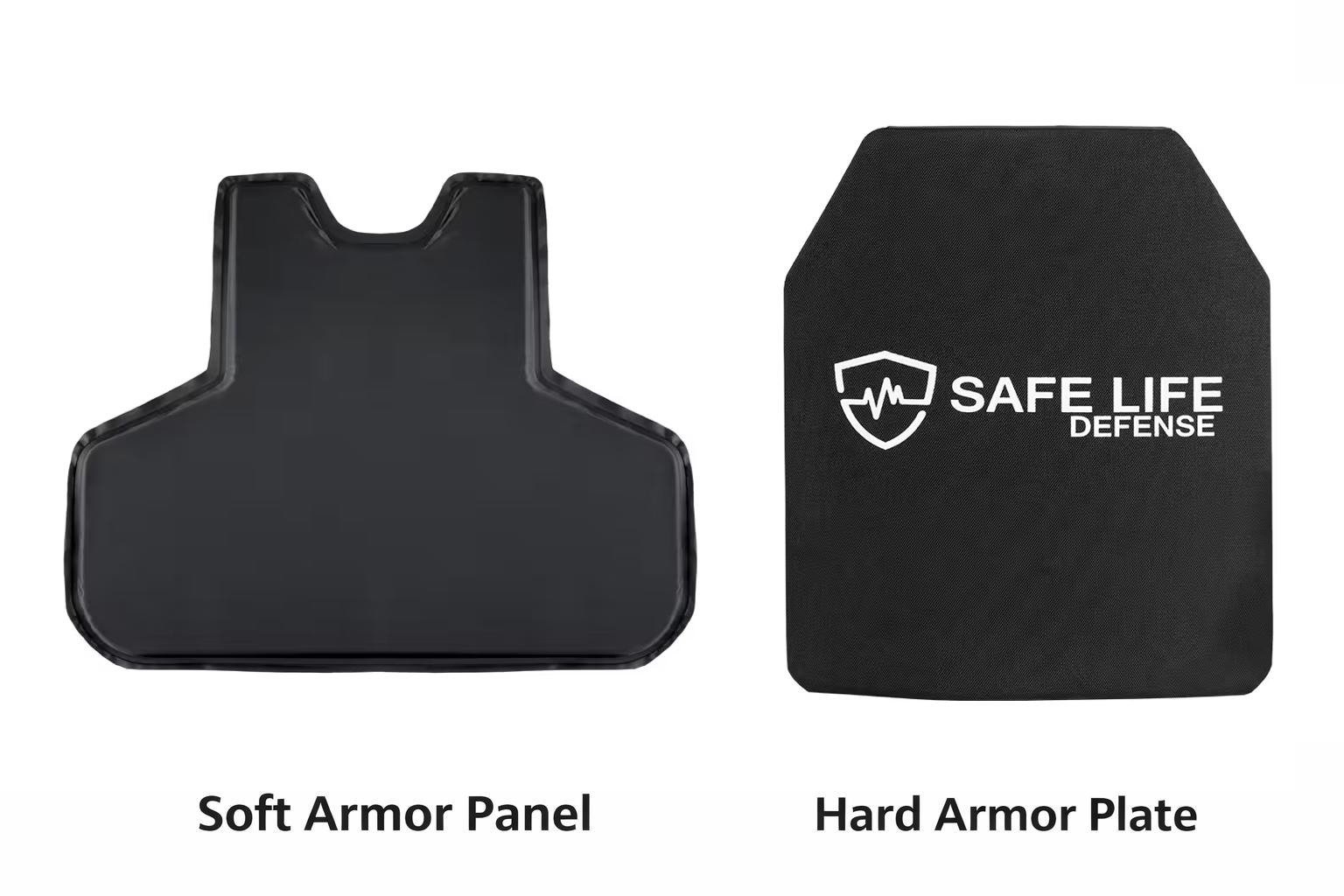
Neither category has an automatic advantage that can be inferred from its name. Soft armor is generally more flexible; hard armor often uses rigid plates optimized for specified ballistic threats. Some flexible panels are engineered and tested for edged-blade or spike resistance, while some armor systems carry separate ballistic and stab compliance ratings.
Coverage, fit, the combination of panels and carrier, and the exact model designation all matter to a buyer. A rifle-rated plate should not be treated as certification of an entire vest for stab threats, just as a stab-rated panel should not be assumed to protect against gunfire. If both threat types are relevant, choose a configuration with documented testing for both, rather than extrapolating from the material used.
For an additional buyer-oriented explanation of flexibility, fit, coverage, and the role of ballistic plates, see Safe Life Defense’s comparison of soft armor vs hard armor. It offers a manufacturer’s perspective on these trade-offs; its product discussions should not be treated as proof of a stab-resistance rating.
The NIJ combination-armor list identifies models demonstrated to comply under both the ballistic and stab testing programs. Use the official listing and the model’s actual labels to verify the protection claimed, rather than extrapolating from whether the armor is flexible or rigid.
Before relying on a product claim, check the exact model and its documentation:
The NIJ publication record and the full standard provide the test scope and labeling requirements. NIJ 0115.00 remains active while a proposed replacement, NIJ 0115.01, is under development; check the current list of active NIJ standards when assessing newer claims.
No such conclusion follows from that label. Level IIIA and HG2 describe ballistic threat ratings. A particular vest may also have stab protection, but that requires separate evidence under an appropriate stab-resistance standard.
Some models are designed for both hazards. Check that the specific model is verified under the applicable ballistic standard as well as NIJ 0115.00. A stab rating by itself does not establish ballistic protection.
No. Its defined test scope is stab resistance. NIJ notes that armor capable of resisting the specified stab threats is generally expected to perform satisfactorily against slash threats, but that is not the same as a separate, universal slash rating.
If someone asks whether a particular knife can go through a bullet-resistant vest, the blade specification and the vest’s ballistic label do not settle the question. NIJ stab protection depends on a separately tested armor model, an identified threat class, and a defined protection level. For a knife enthusiast, the useful lesson is about the limits of materials and test claims—not a prediction about defeating protective equipment.


There are no comments for this article yet.